 WhatsApp
UGC or an influencer campaign? How to choose for your brand
Do you need files for your brand’s channels, publishing to a creator’s audience, or both? Start with the destination before choosing the collaboration.
When a brand plans a creator collaboration, choosing between UGC and an influencer campaign can sound like a decision about filming style. The first question is more practical: do you need content files for your own channels, a publication on the creator’s account, or both?
Your answer shapes the budget, the proposals you compare and the way you evaluate delivery. The same person may offer both services, so a creator’s job title cannot define the assignment. Start with the work you need before moving to a shortlist or a creative concept.
Start with the content’s destination
In this guide, commissioned UGC means creator-made content that presents a product in a recognisable everyday setting. It might explain a feature, demonstrate a routine or answer a common question. The agreed files are central to the handover. Publishing on the creator’s account needs its own scope.
For an influencer campaign, publishing through the participant’s account is part of the plan. The content matters, alongside its context and the relationship between the creator and their audience. Write down where each item will appear: a product page, a brand account, a planned advertisement or the creator’s account. An unresolved destination makes a final quote harder to assess.
Which approach fits your need?
Choose UGC production for specific content assets
Perhaps a product page needs a demonstration, or customer questions suggest a useful series of explainers. List the assets you will actually use. Define their message, language and delivery versions, then assess whether the creator can make them clearly. Follower count alone cannot tell you whether a demonstration will answer the viewer’s question.
Choose an influencer campaign when publishing matters
If you want the product introduced within a creator’s usual content, identify the publication’s role. Will it introduce a use case, explain a choice or direct interested viewers somewhere specific? Consider audience relevance and publishing context. Agree what information you will need afterwards to review the work.
Combine them when each has a purpose
You can commission a creator-account post and additional assets for brand channels. Keep these parts separate in the scope so their deliverables, cost and intended uses are visible. Adding “we also need the file” late in the project can conceal extra requirements, such as a text-free version or an edit for a product page.
Compare proposals on the same basis
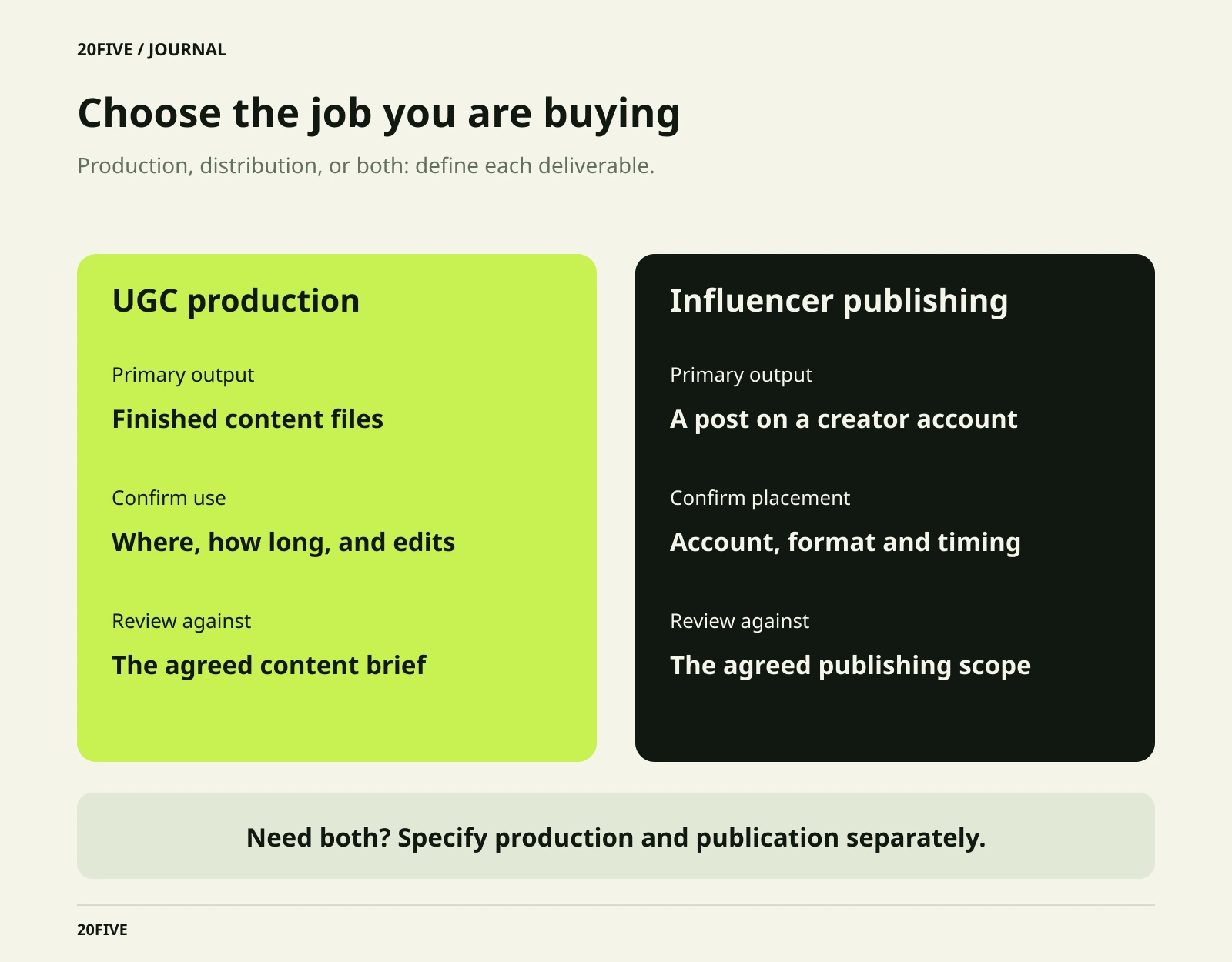
A delivered video and a published post containing production and distribution describe different work. Ask for a breakdown that lets you compare preparation, final assets, language versions, revisions, publishing and any agreed reporting.
Also describe where you intend to use the files, for how long, what editing you need and whether advertising use is planned. Discuss those points explicitly rather than inferring them from a service label. For Dubai-based projects reaching several Middle Eastern markets, decide whether one language treatment and setting fit the intended viewers or whether separate versions are useful.
Define evaluation before production
For a content-production project, review whether the video answers the product question, presents accurate information, includes the agreed versions and suits its intended destination. If the brand will test the assets later, identify the question and the variable being compared. Multiple edits should have a reason beyond filling a folder.
For an influencer campaign, first check the agreed publishing, then examine the information available within the project scope. Separate views, interactions, destination visits and completed orders. One number cannot explain every stage. When comparing campaigns, note differences in audience, timing and measurement rather than treating their conditions as identical.
An illustrative decision: one product, two needs
Imagine a brand selling an everyday bag. Customers need to understand its size and how its compartments work. If the gap is on the product page, a demonstration showing what fits and how the pockets are used may be a useful starting point. The asset has a specific purchase question to answer.
If the brand wants the bag introduced within a relevant creator’s daily routine, publication on that account may belong in the plan. A combined project could contain a focused product explainer and a separate story-led post. This is a fictional planning example, not a 20Five campaign or performance claim.
A checklist before requesting proposals
- Can I describe the need without naming a service?
- Where will each piece appear, and who will publish it?
- Do I need files, publishing or both as separate deliverables?
- Which languages and versions will I actually use?
- Which uses and edits need discussion in advance?
- Do the proposals cover comparable work?
- What will I review at delivery and evaluate later?
- Does the creator understand both production and publishing expectations?
To prepare an enquiry, gather the product, market, content destinations and the outcome you want to understand or evaluate. 20Five is based in Dubai, with creators across the Middle East. A clear description gives your project discussion a practical starting point.
Related reading
Take the next step
Explore the relevant 20Five pathway and discuss a clear scope before taking the next step.
More from the journal.
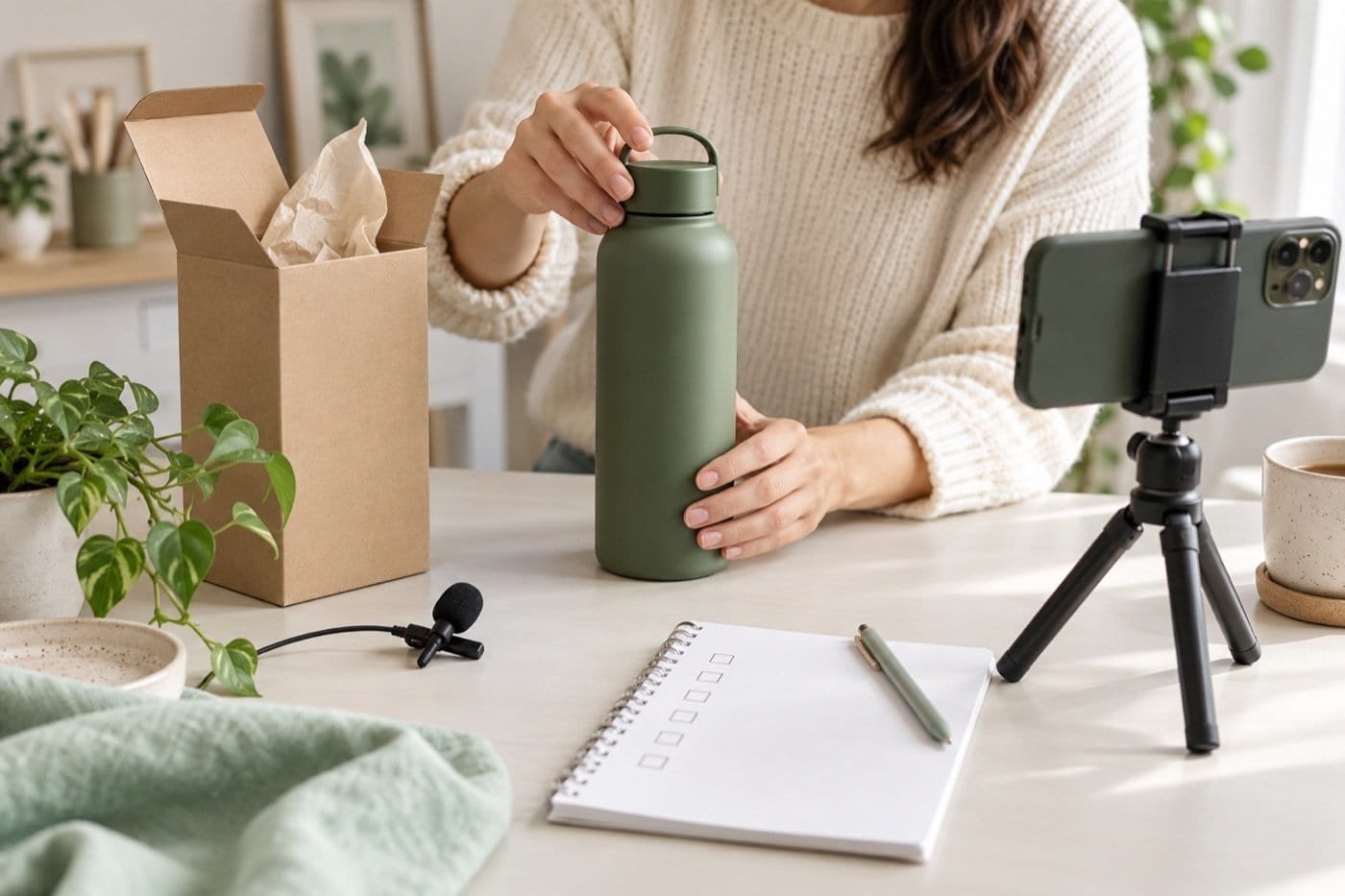
How to write a creator gifting brief before shipping the product
A product cannot explain the assignment on its own. Use this template to agree content, timing, publishing and rights before it ships.
Read the guide
How to keep self-filmed UGC clear and useful
Natural, clear content starts before recording. Use simple checks for sound, image and message accuracy before the final handover.
Read the guide
How to choose the right creator for your brand
Follower count cannot answer every question. Review audience relevance, presentation style and production fit before building your shortlist.
Read the guide